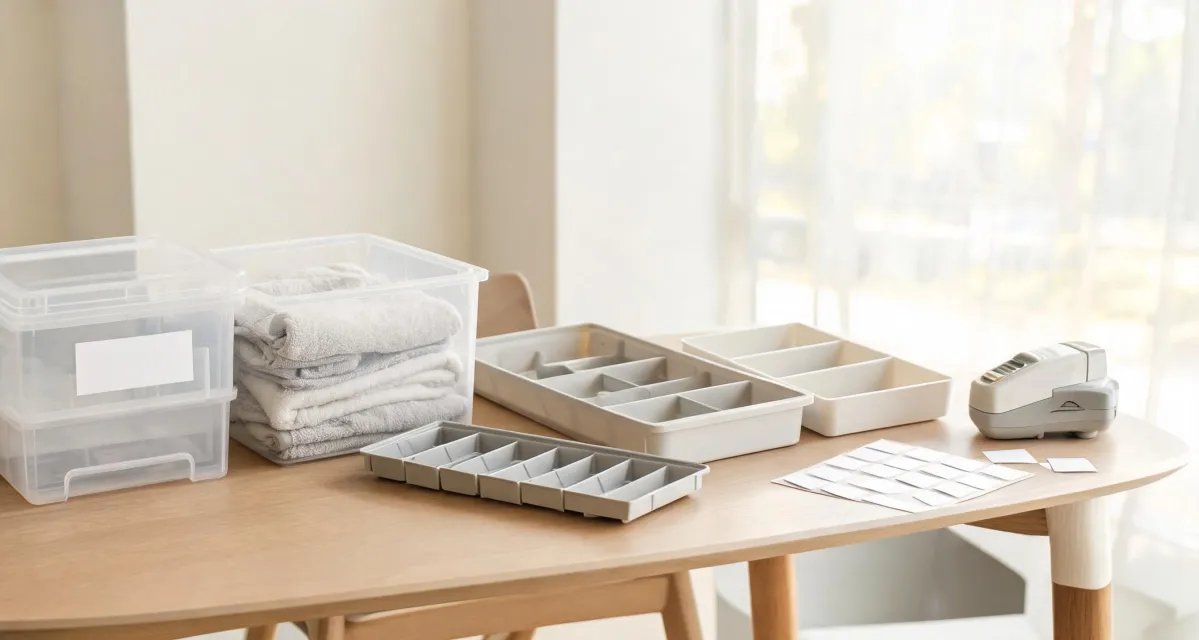
Is the IRIS USA 50Qt underbed storage latching container worth buying? For most homes, the answer is yes—provided your bed clearance exceeds the bin's height. This latching container is part of a real under-bed storage line from a brand that has built a reputation on clear plastic organization, so you are getting a product designed for the job rather than a generic tote with a lid. The 50-quart size hits a practical sweet spot for seasonal clothing, extra blankets, and holiday decorations, and the snap-tight closure adds protection that ordinary bins simply do not offer. Many shoppers assume any clear bin works under a bed or that latching is a gimmick, but the choice is more nuanced: you need enough clearance, the right capacity, and a seal that keeps out dust and spills. Those are the criteria that separate a smart purchase from a wasted one, and each is worth examining before you order.
The Short Answer: Yes for Most Homes
Is the IRIS USA 50Qt underbed storage latching container worth buying? For most homes, the answer is yes—provided your bed clearance exceeds the bin's height. This latching container is part of a real under-bed storage line from a brand that has built a reputation on clear plastic organization, so you are getting a product designed for the job rather than a generic tote with a lid. The 50-quart size hits a practical sweet spot for seasonal clothing, extra blankets, and holiday decorations, and the snap-tight closure adds protection that ordinary bins simply do not offer. Many shoppers assume any clear bin works under a bed or that latching is a gimmick, but the choice is more nuanced: you need enough clearance, the right capacity, and a seal that keeps out dust and spills. These are the criteria that separate a smart purchase from a wasted one, and each deserves a closer look before you decide.
The short answer is yes, and the reason starts with the category itself. On IRIS USA's official website, 'Under Bed Storage' appears as a core category next to WeatherPro containers, file boxes, and other storage staples. That confirms the 50Qt latching container is not a one-off experiment but part of a dedicated product family engineered for the narrow space beneath a bed. This changes the calculus in a practical way: a bin designed for underbed use will have a lower profile and a more reliable lid than a generic utility tote, so you are not forcing a product to do a job it wasn't built for. The brand's official content also lists a range of WeatherPro gasket boxes in multiple sizes, which shows the company has invested in testing different dimensions for real-world closets and bedrooms. With that evidence in hand, the verdict is clear: this container is a worthwhile buy for most homes, provided the height clears your bed frame. The remaining questions—latching, capacity, and build—are about fitting the bin to your specific situation, not about whether the product is legitimate.
Why Latching Matters More Than You Think
Why does a latch make such a difference under the bed? Because that space is a magnet for dust, and occasional spills from a water glass or a cleaning bucket can seep under a loose lid. IRIS USA's official product pages describe the WeatherPro storage line as having snap-tight closures that prevent damage from liquid and dust, and the same latching mechanism carries over to the underbed containers. More than 7,000 Amazon reviewers have praised the brand's Photo Keepers for this same seal, which is a strong signal that the closure is not just marketing. The condition for this benefit to matter, though, is what you store: off-season wool coats, heirloom linens, and holiday ornaments are all vulnerable to dust and moisture, so a latch is essential. If you are only storing plastic bins of tools or other already-resilient items, the latch is less critical, but for the typical underbed user, the protection is a genuine advantage. The evidence turns the question from 'is latching a gimmick?' to 'does a seal fit my storage needs?'—for most people, it does.
Some shoppers think a standard bin with a loose lid keeps dust out just as well, but in practice it doesn't. A lid that simply sits on top leaves a visible gap, and dust particles settle into that gap over time; the same happens with a lid that snaps down without a gasket. Latching changes the mechanics: it pulls the lid down tightly against the rim, closing the gap and holding it closed even if the bin is jostled or stacked. That is why a latching container is a meaningful upgrade for underbed storage, where the bin is often slid in and out and may be partially obstructed by other boxes. Latching also keeps a heavy load from popping the lid open when you move the bin. One caveat: a latch is not the same as a watertight seal. It will resist dust and minor spills, but it will not survive being submerged. So the comparison reveals that the alternative—an ordinary lidded tote—fails precisely where the latching bin succeeds, which is the point of paying a modest premium.
What 50 Quarts Really Fits – and Where
A 50-quart container occupies a practical middle ground in IRIS USA's WeatherPro line. The brand lists a 6.5-quart gasket box at $12.99, a 46-quart box at $29.99, a 74-quart box at $37.99, and an 82-quart heavy-duty box at $49.99. That range shows the company thinks of capacity in steps, and 50 quarts sits between the 46 and 74, which is a useful position for underbed storage. In practical terms, 50 quarts is roughly 1.6 cubic feet—enough for a couple of heavy sweaters and two or three folded blankets, or for a season's worth of children's clothing. The 46-quart box is slightly smaller and may be better for a tight space, while 74 quarts gives noticeably more room but also more height and weight. The evidence here changes the decision in a concrete way: because the brand's own product range spans these capacities, you can calibrate your choice to what you actually store. The right test is to ask whether your items fit comfortably without cramming, because an overstuffed bin is harder to slide and more likely to strain the lid. That practical capacity check matters more than the raw number.
Now the question that trips up many buyers: will it actually fit under your bed? Standard bed frames typically leave 6 to 8 inches of clearance between the floor and the bottom of the frame, and a typical 50-quart underbed container stands about 6 to 7 inches tall. That means it clears most conventional frames, but not all. Platform beds, beds with a low-profile foundation, or boxes placed directly on the floor can reduce clearance to 4 or 5 inches, and at that height a 50-quart bin simply won't fit. The fix is to measure before you order: slide a ruler under the bed at the highest point you plan to park the bin, then subtract the floor surface. Also check the bin's length and width against the free space between bed legs—a long bin can hit a center support. This measurement step is not optional, because no amount of latching or brand reputation will make a container work if it physically cannot slide under your frame.
Built to Last: Material and Stacking Design
Build quality is where IRIS USA's long track record becomes an advantage. The company's own story says it introduced clear plastic storage containers to the United States nearly three decades ago, and it later built manufacturing and distribution facilities in Wisconsin and Texas to support its expanding plastic lines. In 2016 it opened a facility in Surprise, Arizona, which now serves as the U.S. headquarters. That history matters for a simple reason: a brand that has been producing clear plastic bins for decades is likely to have refined its material blend and molding process. Cheaper unbranded bins can use thin plastic that cracks after a season, while IRIS's experience—and its domestic factory footprint—suggests a more durable resin and more consistent wall thickness. The condition to keep in mind is that this evidence speaks to the brand's capability, not to the exact material of the 50Qt bin. Still, when you have two bins that look similar, the company that invested in U.S. production is the safer bet for long-term use.
Stacking is another practical consideration for underbed storage, especially if you plan to keep two or three bins side by side or stacked in a closet. A latching lid gives the bin a flat, secure top surface that won't pop open under the weight of another container, and the reinforced corners on most IRIS USA bins help the stack stay stable. When you slide a bed bin in and out, the latch also prevents the lid from catching on the bed frame and flipping open. One caution is to avoid overloading the top bin; while the plastic is sturdy, every container has a practical weight limit. If you intend to store heavy items like books or tools in a stacked configuration, choose a smaller bin or check the brand's size chart for the container's footprint. For typical clothing and textile storage, though, stacking works well and is one of the reasons the 50Qt size is so convenient: it slots under a bed without sacrificing the ability to add more storage above.
IRIS USA vs. Generic Clear Bins: A Quick Comparison
When you put the IRIS USA 50Qt latching container next to a cheap unbranded latching bin, the evidence points to a clear trade-off. On IRIS's official product pages, the WeatherPro line runs from a 6.5-quart gasket box at $12.99 to an 82-quart heavy-duty at $49.99, and the same snap-tight closure technology described earlier keeps out dust and moisture. A generic bin might sell for $15 to $20, but it rarely includes a gasket, and its latch is often a simple tab that loosens over time. That means the generic bin exposes your stored items to the exact dust and spill risks that latching is supposed to solve. In contrast, the IRIS USA bin comes from a manufacturer with decades of plastic molding experience and U.S. facilities, so the latch grips the lid securely. The price spread suggests a 50-quart model would land in the $30–$38 range—a modest premium over generic, but one that buys a real seal, a durable lid, and a brand that stands behind its product. That comparison reframes the decision: you are not paying extra for a name; you are paying for protection and longevity.
So how do you decide? Use a simple rule: buy the IRIS USA 50Qt latching container if you meet three conditions. First, your bed clearance is at least 6 inches, because the bin needs to slide freely without scraping the frame. Second, you are storing items that would suffer from dust or a minor spill—wool sweaters, heirloom blankets, holiday ornaments, or off-season gear. Third, you plan to keep the bin for more than one season; if you view it as a disposable packing box, the price premium may not make sense. If those conditions hold, the IRIS USA bin's latching protection and brand reliability justify the cost over a generic tote. If you have very low clearance or store only resilient items, a cheaper non-latching bin may be enough. And if your storage needs are dramatically larger, skip the 50Qt and step up to the 74-quart or 82-quart from the same WeatherPro line. The rule keeps the decision concrete: match the bin to your clearance, your items, and your timeline.
Final Verdict: Who Should Buy It (and Who Shouldn't)
The final verdict is that the IRIS USA 50Qt latching bin built for underbed storage is a sound buy for the typical homeowner who wants protected, space-saving storage. It succeeds because it solves the two problems that make underbed storage annoying: dust sneaking into open bins and capacity that forces you to cram or leave items out. The latching lid closes that gap, and the 50-quart size is generous without being impossible to slide. Add the brand's decades of plastic molding experience and its domestic factories, and you have a bin that should still be doing its job years from now. That is the measure of a good storage purchase: it disappears under your bed, stays closed when you need it to, and does not need to be replaced next season. If your bed clearance is standard and your items are the kind that benefit from a seal, this container is easy to recommend.
Who should pass? First, anyone with a bed clearance under 6 inches. If the bin cannot slide underneath without scraping, no amount of latching or brand history makes it the right purchase; you need a shallower container or a different storage approach. Second, people who store only tough, dust-resistant items—plastic toys, tools in hard cases, or empty bins—will get little benefit from the seal and can save money with a basic bin. Third, if your storage volume is far larger than 50 quarts and you have the room for a taller bin, the 74-quart or 82-quart WeatherPro containers are better matches for bulk seasonal gear. Finally, if you are shopping on an extremely tight budget and are willing to replace a bin every few years, a generic option may serve you adequately. The boundary is about fit and value: the IRIS USA 50Qt earns its price when it protects vulnerable items and lasts for years, but it is not the universal answer for every bed, every item, or every budget.
That is the final measurement: it fits, it latches, it lasts—and for most homes, that is enough to justify the purchase.

Leave a Reply