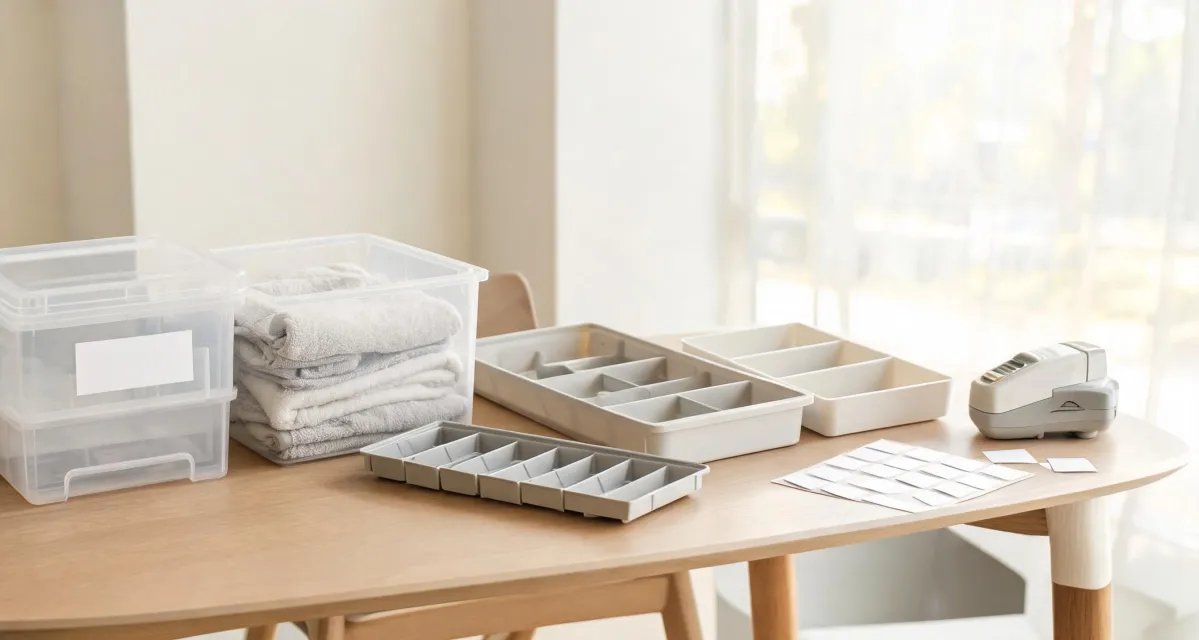
Picture this: you're in a garage, facing a stack of plastic bins. Every time you need a drill or a box of nails, you lift three containers off the pile and dig to the bottom. A stackable storage drawer would let you pull out a tray and see everything at once, but it costs more upfront. Which one actually saves you time and frustration? That's the choice this guide helps you resolve. The answer depends on how often you need what you store.
The Storage Drawer Dilemma: Why You're Overthinking It
Every weekend, the same scene plays out in thousands of garages and playrooms. You buy a set of cheap plastic bins, fill them with holiday decorations or craft supplies, and then discover that the item you need is always in the bottom bin. To reach it, you have to lift three bins off the stack, set them aside, and then reassemble everything, hoping nothing spills. The alternative—a stackable storage drawer—lets you slide out a single tray and see what's inside without disturbing the rest. That small difference in daily effort often determines whether a storage system gets used or becomes a dusty tower you avoid. In short, you're tired of the digging.
The core trade-off is between maximizing vertical space and getting items back out easily. A bin maximizes volume per dollar and seals out dust, but its lid and stack behavior punish you whenever you need something lower. A drawer gives up a little interior space for the ability to pull out a tray horizontally, letting you reach the bottom layer without unstacking anything. When your storage sits in a corner that's hard to crouch into, that convenience isn't a luxury—it's the difference between a system you use and a pile you avoid.
But not every stackable drawer is built the same. Some have flimsy locking tabs that pop open when you pull too hard; others have shallow tracks that make the drawer wobble. The 30-quart size sits in a sweet spot—large enough to hold bulky items, small enough to keep the stack manageable—but you need to know what to look for before you commit. Is the added cost of a 2-pack from a recognized manufacturer justified, or would a generic bin do just as well? That's the question this guide walks through. The answer depends on a few key factors we'll break down next.
Why IRIS USA Is a Credible Name in Storage
IRIS USA's official site lists a complete range of storage solutions, including a dedicated category for Stackable Storage Drawers. The navigation also includes plastic dressers, under-bed storage, eco-friendly file boxes, and the stackable drawer line that matches the 30-quart 2-pack. The site groups related items such as rolling carts and small-parts organizers, which tells you the company thinks about how storage systems work together. That product-line depth matters because it signals a manufacturer that treats storage as a serious engineering problem, not a sideline. Shared tooling and iterative design across a category mean the product you buy benefits from the company's entire range of experience. That's a meaningful signal when you're comparing brands.
Behind the product line is a manufacturing footprint that explains how IRIS USA keeps prices competitive without cutting corners. The company's story, published on its website, describes continued investment in U.S. facilities: manufacturing and distribution centers in Wisconsin and Texas, a new headquarters in Surprise, Arizona, that opened in 2016, and the latest expansion in Pennsylvania in the fall of 2020. That timeline matters because storage products are bulky and heavy to ship; having domestic plants reduces freight costs and lead times. It also gives the brand tighter control over quality—when you own the factory, you can make adjustments when a batch of drawers comes out with a misaligned track, rather than waiting for an overseas container to return.
IRIS USA sells directly from its own website under the banner 'Best Price from Manufacture | Free Shipping.' That direct channel removes a layer of retail markup, and the site often highlights promotions like 15% off or lightning deals at 50% off. Combined with its own distribution centers, factory-direct pricing undercuts big-box-store prices while still offering manufacturer support. The same page also shows small accessories like a 6.5-quart WeatherPro gasket box from $12.99, which gives you a sense of the company's price ladder.
Drawer vs. Bin vs. Shelf: The Real Trade-Offs
To compare fairly, look at five axes: capacity, access, stacking stability, durability, and cost per usable liter. Capacity is comparable, but the drawer's interior is shallower to fit rails. Access is where the drawer wins: you can pull out a tray and see the contents without lifting anything. Stacking stability depends on the locking mechanism: bins have a simple ridge that can shift, while drawers use a positive latch that clicks into place. Durability comes down to wall thickness and plastic quality; a cheap bin can crack in cold garages, while a well-made drawer holds up. Cost is the final axis, and here the bin appears cheaper—but the time you spend digging can quickly exceed the price difference.
Side by side, the pattern is clear. The bin scores high on raw capacity and low on access; you'll save money at the register but pay in every retrieval. The shelf maximizes visibility but wastes vertical space unless you use same-size boxes, and it leaves items exposed to dust. The stackable drawer sits in the middle: slightly less volume per dollar than a bin, but far better access and a locking stack that stays put when you pull a lower tray. That middle position is why the 30-quart 2-pack works for many homes—it's not the cheapest option, but it encourages you to put things away because you can get them out again.
Consider how IRIS USA's small-item storage is received, and you'll see a pattern that transfers to the stackable drawer line. The brand's Photo Keepers, for example, are described on the official site as a solution for crafts, toys, photos, and other small items, and the page notes that more than 7,000 Amazon reviewers love them. Those same categories—craft supplies, kids' toys, spare parts—are exactly what the 30-quart drawer is designed to hold. The snap-tight closures that protect contents from liquid and dust in the Photo Keepers reflect the same engineering mindset applied to the drawer line's latching system. When thousands of reviewers find a brand's storage boxes useful across multiple rooms, consistent quality across the portfolio becomes a reasonable expectation.
The Engineer's Take: Why Stackable Drawers Hold Up
From an engineer's perspective, the drawer's advantage is geometry. The drawer uses a horizontal pull motion, so the weight of items rests on the bottom panel and is supported by the drawer slides on either side. That means the force you apply is parallel to the floor, not against a vertical stack. A bin, by contrast, requires you to lift straight up, which pits your grip against gravity and the friction of the walls. A well-designed stackable drawer also has a positive locking mechanism on the top and bottom surfaces; when you click a drawer into place, the ribs engage and prevent the unit from shifting sideways. The result is a stack that behaves like a single furniture piece, not a tower of loose boxes.
The company's story page reinforces this engineering focus. It describes how IRIS USA has built a portfolio spanning home goods, small appliances, pet products, and storage, with a particular emphasis on plastic molding. That history matters because plastic storage is unforgiving: if the mold design is off, the part warps, the drawer jams, and the lock fails. A company that has been in the plastic business long enough to open multiple U.S. plants has clearly invested in the tooling and testing required to produce reliable components. That commitment shows in products that keep working after years of use.
When you're shopping for a drawer, don't get hypnotized by the headline capacity. Measure the actual footprint—width, depth, and height—and compare it to the space where you plan to put the stack. The 30-quart size from IRIS USA is designed to be a modular unit, so you can add or remove drawers as your needs change. Also check the handle style: a flush handle that's part of the drawer front is more durable than a thin finger slot. Look for slides that are integrated into the side walls rather than thin wires, because the slides carry the load every time you pull. And pay attention to the locking tabs—they should click with positive feedback, not feel mushy.
The Decision Rule: When 30 Qt × 2 Makes Sense
The decision rule is simple: if you'll access the stored items at least once a month, a drawer beats a bin; if you need to store something for a season and rarely look at it, a cheaper bin is fine. The math is simple—the time you save on each retrieval is small, but it compounds over dozens of trips. In a busy household, the difference between a five-second drawer pull and a two-minute bin dig adds up to hours each year. So the 2-pack makes sense when you have two zones with frequent-access items, like a garage workbench for tools and a playroom for toys. For rarely used holiday decorations in the attic, a sealed bin is still the right call.
Two 30-quart drawers give you 60 quarts of storage, about 15 gallons—enough for a substantial collection of small parts, craft supplies, or winter accessories. If the 2-pack typically sells for around $30 at discount retailers, you're paying roughly $2 per gallon of usable volume. That's higher than a bulk bin, which might cost $10 for 27 gallons, but the price premium buys you the ability to retrieve an item without unstacking. To justify the extra cost, each retrieval event needs to save you at least a minute of digging, and for most households that threshold is easy to cross.
Before you click 'add to cart,' run through this checklist. First, measure your available floor space or shelf width—each drawer's footprint must fit, and leave 2–3 inches of clearance for pulling. Second, weigh what you'll store: heavy items like power tools should go in lower drawers, so check that the drawer's weight rating (if printed) handles the load. Third, verify the stack's stability: the locking mechanism should engage on all four corners, and a fully loaded stack shouldn't wobble when you pull the middle drawer. Fourth, think about the room's climate—unheated garages with extreme humidity can cause plastic to become brittle, so you may need to avoid overloading. Finally, count how many drawers you actually need; two is often a starting point, not a permanent limit.
The Verdict: Who Should Buy the 2-Pack
If your storage problem matches the frequent-access pattern—garage tools, kids' toys, craft supplies, or office supplies that you use more than once a month—the IRIS USA 30 qt stackable storage drawer 2-pack is the right tool for the job. The drawer's pull-out access eliminates the dreaded bottom-bin excavation, and the locking stack keeps the unit stable as you work. For a home with an active workshop or a playroom that needs daily cleanup, the convenience is worth the price premium over a bulk bin. This is the recommendation: buy the 2-pack when you have two zones that need regular access, and pair it with cheaper bins for long-term archive.
The 30-quart drawer is not a catch-all. It shouldn't be used for extremely heavy items like engine blocks or bags of concrete mix—plastic drawers are engineered for household storage, not industrial loads. In a damp or unheated shed, condensation and temperature swings can weaken plastic over time, so if your environment has high humidity, consider adding desiccant packs or choosing a sealed bin instead. The drawer's design also assumes a reasonably level floor; on an uneven surface, the stack might sit with a slight tilt, making the lower drawers harder to slide. If you're planning to place it on a wire shelf, check that the shelf's slats aren't wide enough to catch the drawer's bottom rails.
Remember the opening dilemma—bins that make you dig, drawers that slide out? The answer isn't that one is universally better; it's that they serve different jobs. For anything you need often enough to want instant access, the drawer wins because it turns a frustrating dig into a single pull. The 2-pack from IRIS USA brings that logic to two points in your home without asking you to overhaul your entire storage system. Measure your space, think about retrieval frequency, and the right choice becomes clear. If you'll open a container at least monthly, pay for the drawer; if it's a twice-a-year trip, the bin is fine.
The 30-quart drawer isn't the cheapest way to store things—but it's the most efficient way to retrieve them.

Leave a Reply